
SoilFuel Plus.
A post-harvest
field case study.
Application evidence, a wheat-yield baseline, and the science behind the next season’s questions.
BIE – E · Biesterfeldt · Flat Land Farms
2026 observational record · Treatment response not yet measured
Study abstract
This case study characterizes a SoilFuel Plus application at BIE – E and establishes the preceding harvest as a spatial baseline. John Deere records describe the application footprint, liquid rate and operating conditions. The September wheat harvest provides context for future comparisons, while the methods and economic model make the assumptions explicit.
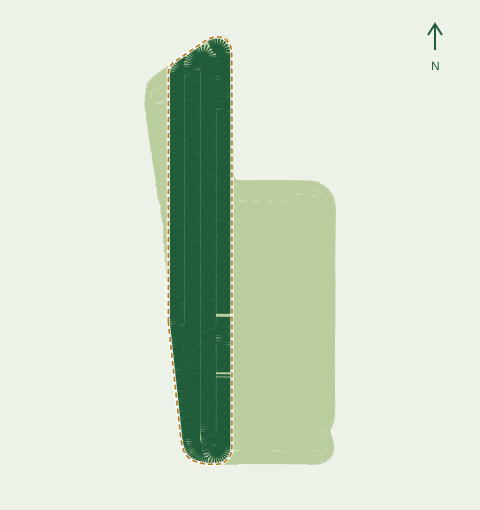
Current finding: the application is documented and the 29 Sep baseline shows 46.33 bu/ac inside the 09 Oct application boundary versus 47.09 bu/ac outside (−0.76 bu/ac pre-trial). A post-application harvest and matched controls are still required to assess a treatment response.
Application characterization
Recorded operation totals and spatial evidence.
John Deere overview totals. Liquid recorded under “Soilfuel Plus”; concentrate dose and dilution are unconfirmed. Gallons follow the export’s units.
Spatial comparison
Figure 1 · Interactive field recordLoading 7,194 application records and 11,388 harvest records…
Toggle harvest and application independently; application sample areas draw above harvest. Drag to pan; hover or tap a sample area for detail. Application filters and replay affect application only. Harvest remains the full September 29 baseline. Footprints use recorded heading and travel distance: logged harvest section-control widths (5–40 ft) and sprayer section widths totaling a 90 ft sprayer boom. Turn sweeps reconstruct a rigid boom between continuous logged positions and headings. Gaps and inconsistent records retain endpoint rectangles. The dashed trial boundary is the fixed convex hull of the active 09 Oct application envelope (~18.91 ground ac); it is derived from sprayer geometry rather than a separate surveyed boundary file. Post-application harvest and matched controls are still needed before inferring causal yield response.
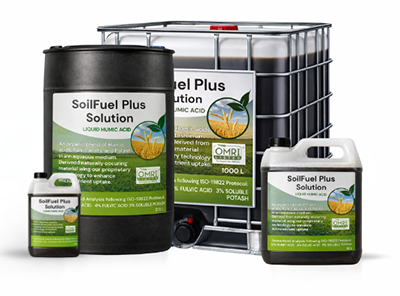
SoilFuel Plus
A liquid humic–fulvic product, examined here through the application record and its pre-treatment context.
The science chapter explains the chemistry of this product category. The economic model explores the response needed to cover product and application costs.
Explore the molecular scienceModel the economicsBrand and product imagery: SoilFuel and Carbon OxyTech. This case study does not imply manufacturer endorsement or independent peer review.